



Blog
| 10Feb |
How Advanced PCB Assemblies are Powering the Rapid Rise of Flying UAVs
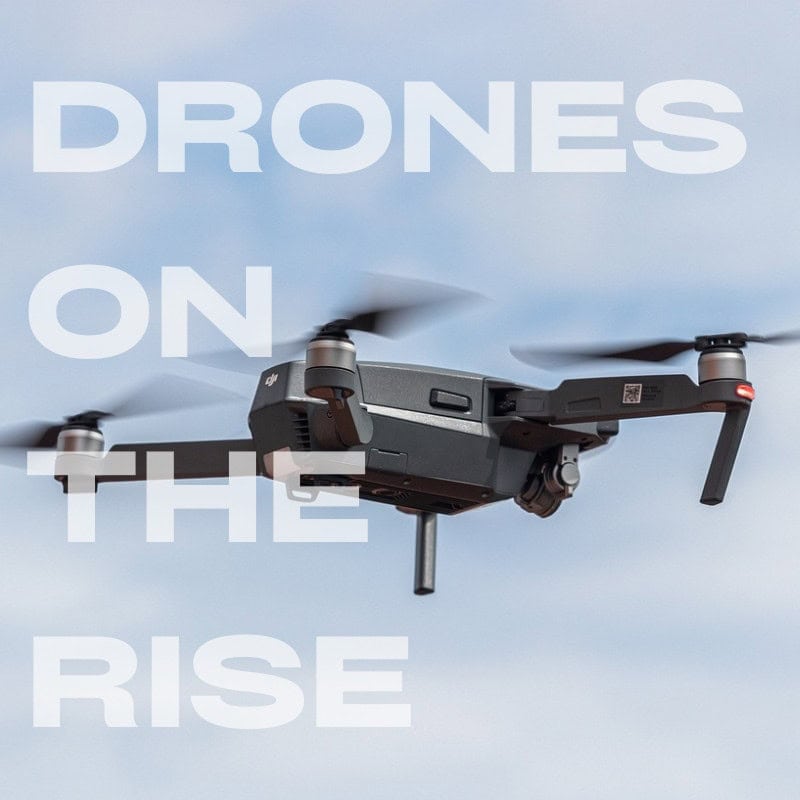
Unmanned aerial vehicles (UAVs) — more commonly known as drones — have moved far beyond their origins as hobbyist tools or niche military assets. Today, flying UAVs represent one of the fastest-growing segments in global aerospace and electronics manufacturing. Their accelerating adoption across commercial, industrial, public-sector, and defense applications is reshaping how goods are delivered, how infrastructure is monitored, how data is gathered, and how conflicts are fought.
Enabling this transformation is a wide range of participants in today’s electronics ecosystem, including companies like ours: Cascade Systems Technology. Indeed, every meaningful leap in drone capability — longer flight ranges, greater autonomy, heavier payloads, more precise navigation, enhanced survivability, and ever greater sensor tools — relies on increasingly sophisticated printed circuit board assemblies (PCBAs).
In the rest of this blog, we’ll explore three dimensions of the UAV revolution:
- the explosive growth of the flying drone market and what is driving it,
- the complex electronic systems that enable modern UAVs, and
- the critical PCBA performance characteristics required to operate in airborne environments.
Part I: The Rapid Growth of Flying UAVs — and What’s Driving It
A Market Expanding at Speed and Scale: The global market for flying UAVs has expanded dramatically over the past decade and shows no sign of slowing. Once dominated by military programs, the sector now encompasses commercial delivery platforms, agricultural drones, inspection and mapping systems, emergency response vehicles, and advanced consumer products. Improvements in battery technology, lightweight materials, onboard computing, and wireless communications have steadily lowered barriers to entry, enabling new players and new use cases.
Commercial adoption has been particularly strong in areas such as precision agriculture, where drones can survey crops and optimize inputs; infrastructure inspection, where they reduce risk and cost; and logistics, where last-mile delivery continues to be actively tested and refined. At the same time, government agencies rely on UAVs for border security, search and rescue, wildfire monitoring, and disaster response.
Looking ahead, future applications under active development include fully autonomous cargo drones, urban air mobility support systems, persistent aerial sensing networks, and coordinated drone “swarms” capable of collective decision-making.
Defense and Warfare as Accelerants of Innovation: While commercial applications are expanding rapidly, military and defense use has been one of the most powerful accelerants of UAV innovation. Recent conflicts — most notably the war in Ukraine — have demonstrated how central drones have become to modern warfare. Flying UAVs are now used for reconnaissance, targeting, electronic warfare, decoy operations, and direct strike missions, often at a fraction of the cost of traditional aircraft.
This environment has placed intense pressure on drone developers to iterate quickly, integrate new capabilities, and harden systems against countermeasures. Electronic resilience, rapid production scalability, and supply chain reliability have become strategic priorities. The lessons learned in defense contexts frequently cascade into commercial and industrial UAV designs, raising expectations for performance and reliability across the entire sector.
Key Drivers of Adoption and Innovation: Several core forces are driving UAV growth and shaping system design:
- Autonomy and AI: Onboard processing enables drones to interpret sensor data, avoid obstacles, and execute missions with minimal human intervention.
- Connectivity: Advanced wireless links, satellite communications, and mesh networking allow UAVs to operate beyond line of sight and as part of coordinated fleets.
- Miniaturization: Smaller, lighter electronics enable longer flight times and greater payload flexibility.
- Cost Efficiency: Compared to manned aircraft, UAVs offer dramatically lower acquisition and operating costs.
- Regulatory Evolution: As airspace regulations mature, broader commercial deployment becomes feasible.
Each of these drivers increases reliance on advanced electronics — and, by extension, high-performance PCB assemblies.
Part II: The Electronic Systems That Enable Modern UAVs
A flying UAV is not a single electronic system, but a tightly integrated network of subsystems, each with distinct performance and reliability requirements. PCBAs – including some CST has been engaged to provide — form the backbone of this ecosystem.
- Flight Control and Onboard Computing: At the core of every UAV is its flight control system. These PCBAs host microcontrollers, processors, and real-time operating systems that stabilize the aircraft, execute flight plans, and manage inputs from sensors and operators. As autonomy increases, these boards must also support advanced algorithms for navigation, decision-making, and fault management—often within severe size and power constraints.
- Communications: From Remote Control to Satcom: Reliable communication is mission-critical. UAVs may rely on line-of-sight radio frequency links, long-range wireless networks, radar-based systems, or satellite communications (satcom), depending on mission profile. PCBAs supporting these functions often integrate RF components, antennas, encryption modules, and signal processing hardware, all of which must perform consistently despite interference, motion, and environmental stress.
- Navigation, Gyroscopes, and Positioning: Precise navigation depends on tightly integrated inertial measurement units (IMUs), gyroscopes, accelerometers, magnetometers, and GPS modules. These sensor-rich PCBAs must deliver accurate, low-latency data while resisting vibration, temperature fluctuations, and electromagnetic interference.
- Sensor Suites and Payload Interfaces: Modern UAVs carry increasingly sophisticated sensor payloads, including optical cameras, infrared imaging, LiDAR, radar, chemical sensors, and more. PCBAs must manage high-speed data acquisition, processing, and transmission, often while supporting modular payload designs that allow rapid reconfiguration.
- Power Management, Storage, and Optimization: Efficient power usage can mean the difference between mission success and failure. Power-related PCBAs regulate battery output, manage charging, distribute power across subsystems, and monitor system health. Energy storage integration, voltage regulation, and power optimization are critical, especially as payloads become more demanding.
- Propulsion and Motor Control: Electronic speed controllers (ESCs) and motor control PCBAs translate digital commands into precise mechanical motion. These assemblies must handle high currents, rapid switching, and heat generation while maintaining reliability under constant vibration.
- Security, Evasion, and Countermeasures: As UAVs become more capable, they also become targets for interference and exploitation. PCBAs increasingly support encryption, secure boot processes, anti-jamming technologies, and counter-hacking measures. In defense contexts, electronic counter-countermeasures and stealth-related systems add another layer of complexity.
Part III: What UAV PCB Assemblies Must Deliver
Flying applications impose unique demands on electronics, which means onboard PCBAs designed must meet a stringent and often competing set of requirements.
- Small Form Factors and Lightweight Designs: Every gram of payload matters. PCBAs must be densely populated, carefully routed, and optimized for minimal weight without sacrificing performance or reliability. Advanced packaging techniques and component selection play a central role.
- High Power Handling and Thermal Management: Despite their compact size, many UAV PCBAs must handle significant power loads. Effective heat dissipation—through board layout, materials selection, thermal vias, heat sinks, or advanced cooling strategies—is essential to prevent performance degradation or failure.
- Precision, Consistency, and Electrical Performance: UAV systems rely on precise, repeatable electronic behavior. Signal integrity, timing accuracy, and noise control are non-negotiable, particularly in navigation, communications, and sensor-processing assemblies.
- Ruggedization and Environmental Protection: Flying UAVs are exposed to vibration, shock, moisture, dust, and temperature extremes. Conformal coatings, hermetic sealing, and other ruggedization techniques help protect sensitive electronics and extend operational life.
- Resistance to Vibration and Mechanical Stress: Continuous vibration from propulsion systems can fatigue components and solder joints over time. UAV PCBAs must be designed and assembled with materials and processes that withstand sustained mechanical stress.
- Reliability Over Long Missions and Harsh Conditions: Whether operating in a desert, over open water, or at high altitude, UAV electronics must perform reliably over extended missions. Failure is often not an option when recovery is impossible or mission-critical data is at stake.
- Electronics as the Enabler of the UAV Future: Flying UAVs are redefining what is possible in the air, across industries and across the globe. While airframes, propulsion, and software often capture headlines, it is advanced electronics — and the PCB assemblies that support them — that quietly enable every breakthrough.
As UAV platforms become more autonomous, more connected, and more mission-critical, the expectations placed on PCBAs will only increase. Manufacturers capable of delivering lightweight, rugged, high-performance assemblies at scale will play a pivotal role in shaping the future of flight — un-crewed, intelligent, and increasingly indispensable.
How CST Fits Into this Dynamic Sector
To wrap this blog up, I’d just like to point out that Cascade Systems Technology has been an active participant in the UAV market, particularly given that many of the industry’s innovators are hard at work right here in the Pacific Northwest. See our AUVSI blog.
Some examples, without naming names:
- We’ve been working alongside/supporting one customer in our region who is focused on lightweight, small form-factor “off-the-shelf” boards that provide a range of flight control functions for hobbyist drone builders.
- We are engaged with a potential client to build a sensor-based product for drones used in warfare applications. Because drone RF-based navigation data may be jammed in the battlefield airspace, companies are implementing sensor-based products that enable navigation using ground imaging, wind and pressure sensing, and other navigation techniques.
- Finally, we’re engaged with a firm that is developing drones with heavy-lift capabilities and characterized by higher-numbers of rotors, ruggedized structures, larger footprints, and payload capabilities that dwarf low-cost commercial quadcopters.
In all three instances (among others not mentioned), I’m proud to say CST is stepping up to meet the very challenges I outlined in the first sections of this article: Partnering with an experienced PCBA manufacturer like us has helped several of our customers ensure the electronics at the heart of their UAVs are built for performance — whether the goal is thermal management associated with high-power use over relatively short durations, ruggedization to withstand the elements, weight reduction to squeeze more functionality out of smaller and smaller spaces, or other innovations needed to help manifest our customers’ visions.
If you wish to join their ranks, put us to the test, or simply obtain a capabilities presentation to round out your field of potential PCBA suppliers – we’d be excited to hear from you and honored to be considered for the job. To initiate a dialogue, contact our Director of Business Development, Jack Frost.
Meantime, thanks for reading…
– Shantanu R. Gupta,
President & CEO, Cascade Systems Technology


Are You Ready to Get Started?We have a team of customer service experts ready to assist you today! |